The History and Cultural Legacy of the Virgin of Guadalupe
Few symbols hold as much meaning in Mexican life as the Virgin of Guadalupe. Her image is seen everywhere; in homes, murals, storefronts, rosaries, and celebrations. She is a central figure in faith, but also a bridge between cultures, a symbol of resilience, and a reflection of Mexico’s long story of survival and identity.
The Story on Tepeyac Hill: Juan Diego and the First Encounter
The traditional account begins in December of 1531, only a decade after the fall of the Aztec Empire. Indigenous communities were experiencing profound upheaval: loss of land, disease, forceful cultural suppression, and the heavy pressure of Spanish rule. It was in this moment that Juan Diego, an Indigenous farmer and recent convert to Christianity, became the center of a history-altering event.
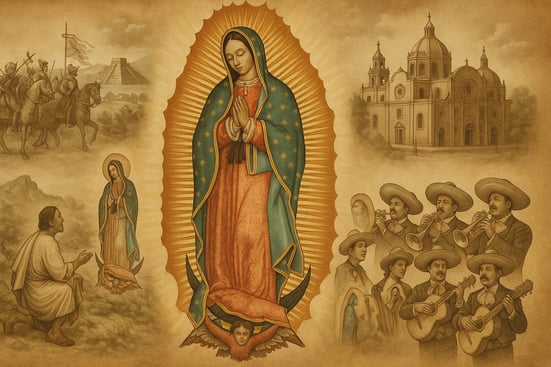
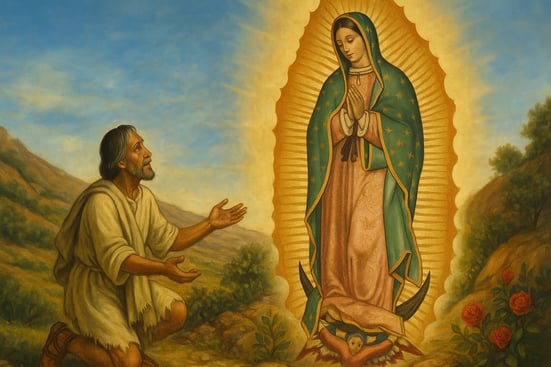
On the morning of December 9, Juan Diego was walking to Mass when he heard music; soft, melodic, unlike anything he had heard before. On Tepeyac Hill, he saw a radiant figure. She spoke to him in Náhuatl, calling him “Juanito, Juan Dieguito”, a tender, affectionate greeting that immediately set her apart from the harshness of the time.
She asked him to deliver a message to Bishop Juan de Zumárraga: she desired a shrine to be built on the hill so she could offer comfort, protection, and compassion to the people of the land.
The Struggle for Belief: Doubts and Obstacles
Juan Diego obeyed, but his task was not easy. When he approached the bishop, he was dismissed politely but firmly. A request for a shrine was no small matter, and coming from an Indigenous man made it even harder for church officials to take seriously.
Juan Diego carried the weight of doubt in both directions:
- the church doubted him,
- and he doubted himself.
He returned to Tepeyac, apologizing to the Virgin and suggesting she should choose someone more “important.” But she insisted he was the right messenger.
The next day, Juan Diego tried again. This time, the bishop asked for proof, something undeniable.
A Moment of Crisis: Juan Diego’s Detour
As the story goes, Juan Diego didn’t return to the hill immediately. His uncle, Juan Bernardino, had fallen gravely ill. Out of urgency, Juan Diego took another path to seek a priest for last rites. Even in this moment of fear, the Virgin appeared again, reassuring him that his uncle would recover.
This encounter matters because it shows Juan Diego not as a mythical figure, but as a man caught between responsibility, fear, and faith.
The Sign: Winter Roses and the Tilma
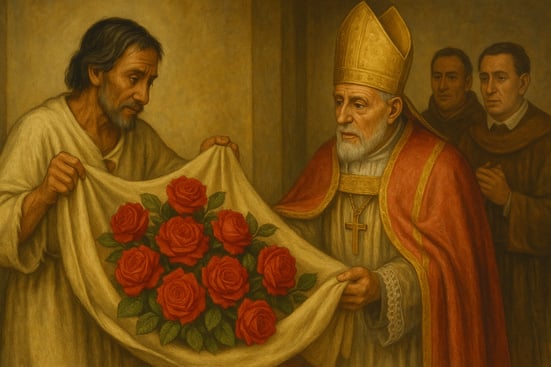
The Virgin instructed him to climb Tepeyac and gather flowers for the bishop. This would have been absurd under normal circumstances. December on the hill was dry and cold, but Juan Diego found Castilian roses blooming in full color.
He gathered them in his tilma, holding them close so that they wouldn’t fall. When he opened the tilma before the bishop on December 12, the flowers scattered to the floor, but the true miracle was what appeared on the cloth. Her image; full, intact, and unlike any painting of the time had formed on the cactus-fiber garment.
The bishop fell to his knees. All doubts vanished.
Within days, the hill became a pilgrimage site.
Why This Story Took Root So Deeply
Historians often highlight how Guadalupe’s message resonated with Indigenous communities:
- She spoke in their language.
- Her clothing and imagery blended Indigenous and Spanish symbolism.
- Tepeyac Hill had once been associated with the mother goddess Tonantzin.
Her appearance became a cultural meeting point between worlds in conflict. She offered comfort at a time when traditional structures had been dismantled. She became a figure of unity in a land divided.
Guadalupe and the Mexican Identity
Over the centuries, the Virgin of Guadalupe grew into more than a religious icon. During the War of Independence, she became a symbol of liberation. Revolutionary leaders carried banners with her image. For the poor and the marginalized, she became a source of strength. For families, she became a symbol of protection and hope.
Her influence today remains strong:
- December 12th celebrations
- Pilgrimages
- Community gatherings
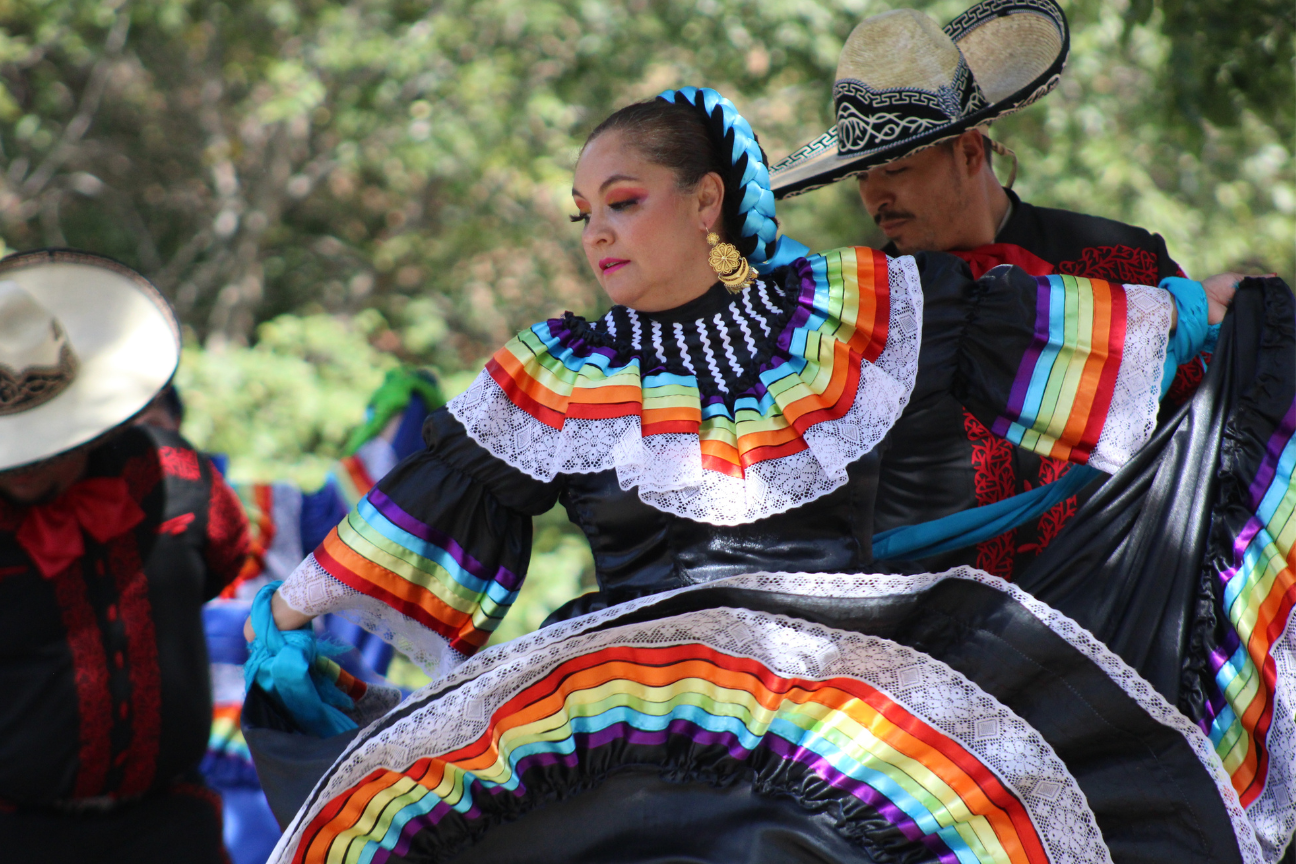
- Music and dance offerings
- Home altars
- Artistic tributes
Her presence is woven into the emotional, cultural, and spiritual fabric of Mexico.
The Tradition of Matachines
Although Ballet Folklorico Xochipilli does not perform the danza de matachines, the dance is closely tied to Guadalupe celebrations in many regions of Mexico.
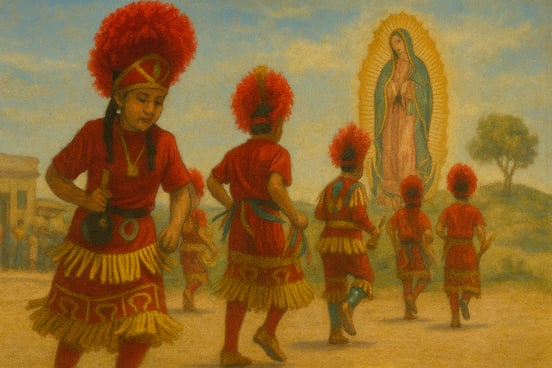
Matachines dancers offer their movement as a form of devotion. The dance blends Indigenous and Spanish elements, echoing the same cultural fusion present in the Guadalupe story. With steady drum rhythms, rattles, bows, and feathered crowns, the dancers reenact themes of faith, struggle, and gratitude.
On December 12, matachines often lead processions to honor La Morenita. Their steps symbolize promise, sacrifice, and cultural memory.
Enduring Significance
For many Mexican families, the Virgin of Guadalupe is a constant source of comfort. Her story teaches perseverance, humility, and the idea that dignity can survive even the hardest moments in history.
For groups like Xochipilli, understanding her legacy helps preserve the deeper context behind Mexican traditions. Even without performing Matachines, recognizing the history strengthens the cultural storytelling that folklórico represents.
The story of the Virgin of Guadalupe is one of faith, identity, and cultural resilience. From Juan Diego’s struggle to be believed to the image on the tilma that changed history, the narrative continues to shape Mexican life. She remains a symbol of hope for millions, a reminder of cultural roots, and a guiding presence across generations.